From Pixels to States: Rethinking Interactive World Models as Game Engines
Building interactive worlds that respond coherently to player actions has long been a shared goal of computer graphics, games, and artificial intelligence.
Papers, modelos e datasets em alta no Hugging Face, além do blog oficial — com leitura editorial em português.
Building interactive worlds that respond coherently to player actions has long been a shared goal of computer graphics, games, and artificial intelligence.
Multi-reference-to-audio-video (MR2AV) generation aims to generate coherent audio-video content conditioned on multiple references and textual instructions.
Video generative models commonly rely on latent spaces learned by 3D Variational Autoencoders (3D-VAEs).
Discrete denoising diffusion models (DDMs) have recently emerged as a compelling alternative to autoregressive (AR) modeling for discrete data, offering parallel generation and ite…
US military’s drone boats struck an Iranian naval port as war heats up again.
Google is adding AI image generation to Search's AI Overviews. When no matching image exists on the web, the new Nano Banana 2 Lite model generates one from the search query. The rollout starts in the coming weeks. The article Google Search now generates AI images when it can't find what you're looking for on the web appeared first on The Decoder .
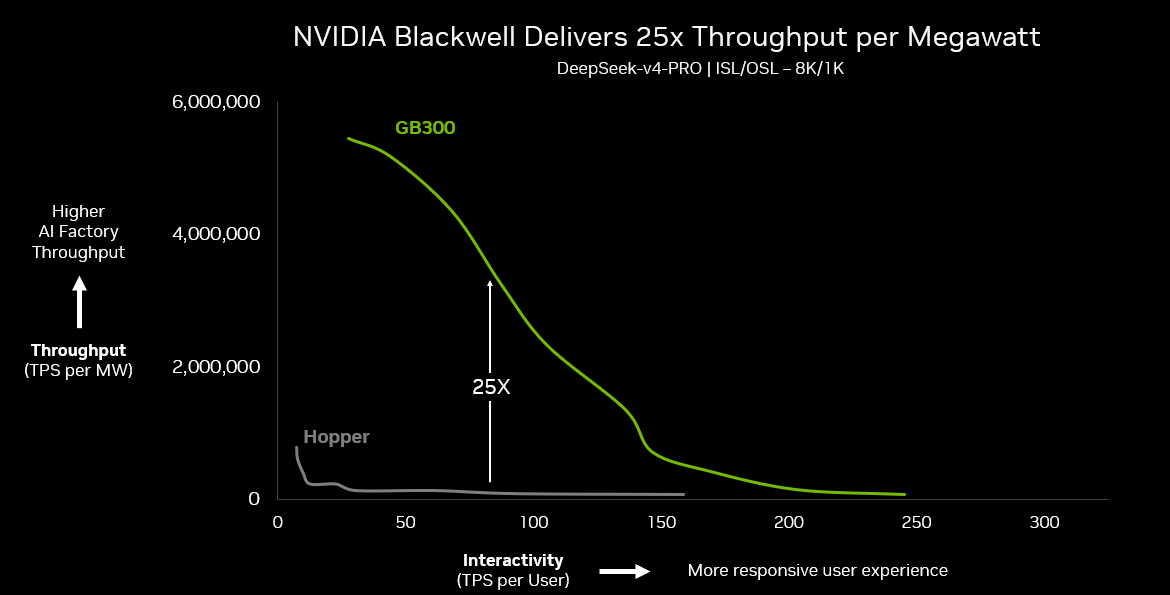
Power is AI infrastructure’s inescapable constraint. How many tokens an AI factory can generate within a fixed power budget determines its revenue and profitability. Because of this, performance per watt — a metric that can’t be gamed, only earned through real-world results — is the foundation for AI factories. As agentic AI drives token demand […]
Singapore-based AI video startup PixVerse is now valued at over $2 billion after an extended Series C round. The article PixVerse's $2B valuation shows investors still believe AI video generation has room for another winner appeared first on The Decoder .
arXiv:2607.09759v1 Announce Type: new Abstract: Building assistants that can continually watch the world, remember what they see, and reason over their accumulated experience is a long-standing goal, and recently multimodal agents equipped with long-term memory over video streams have attracted increasing interest. Unfortunately, existing systems either keep their memory inside the model context or in a flat feature store, and organize it around frames rather than around the persistent entities ...
arXiv:2607.10386v1 Announce Type: new Abstract: Large language models (LLMs) excel at generating long chains of thought, but long reasoning traces are often verbose and memory-inefficient. In this work, we introduce Structured Thoughts, a framework that organizes reasoning into alternating and blocks: captures exploratory scratch work, while contains the distilled conclusion of that step. We construct a dataset of structured thoughts by segmenting reasoning traces into blocks and prompting an LL...
arXiv:2607.09784v1 Announce Type: new Abstract: Real-image diffusion inversion is governed by a tight quality-cost trade-off, with costs incurred in computation, storage, or per-image optimization. We study this trade-off through the forward Gaussian noise anchor that defines a diffusion trajectory and isolate two mechanisms behind effective stored-noise inversion. First, diffusion noise exhibits an element-wise compression asymmetry: int8 full-dimensional anchors preserve reconstruction, wherea...
arXiv:2607.09911v1 Announce Type: new Abstract: Multi-robot path planning in human-shared environments requires a delicate balance between robust inter-robot coordination and socially aware behavior. While diffusion models excel at generating predictable, human-like paths, existing generative planners are often restricted to paths of fixed duration and high computational latency, limiting their adaptability to varying goal distances and hindering real-time deployment. We present Multi-Robot Roll...