The Speedup Paradox: Rethinking Inference Speed-Quality Trade-off in Embodied Tasks
arXiv:2606.28529v1 Announce Type: new Abstract: Embodied foundation models have recently been widely used to improve robot generalization and task success rates. Previous works apply lossy efficient-inference techniques such as quantization, pruning, and asynchronous inference, accepting small action quality degradation in exchange for lower per-step computation cost and inter-action latency. However, unlike traditional static ML tasks, embodied tasks involve repeated interaction with the enviro...
arXiv cs.RO
·Yujin Wang, Junli Chen, Yixuan Li, Shunan Dong, Huazhong Yang, Yongpan Liu, Hongyang Jia
·
// relacionados

Leia também
Editorial
RynnValue: o relógio do vídeo como recompensa para robôs
Blog
Anthropic aplica marca d'água a todas as saídas do Claude globalmente, com marcas que "podem persistir mesmo após alguma edição"
Blog
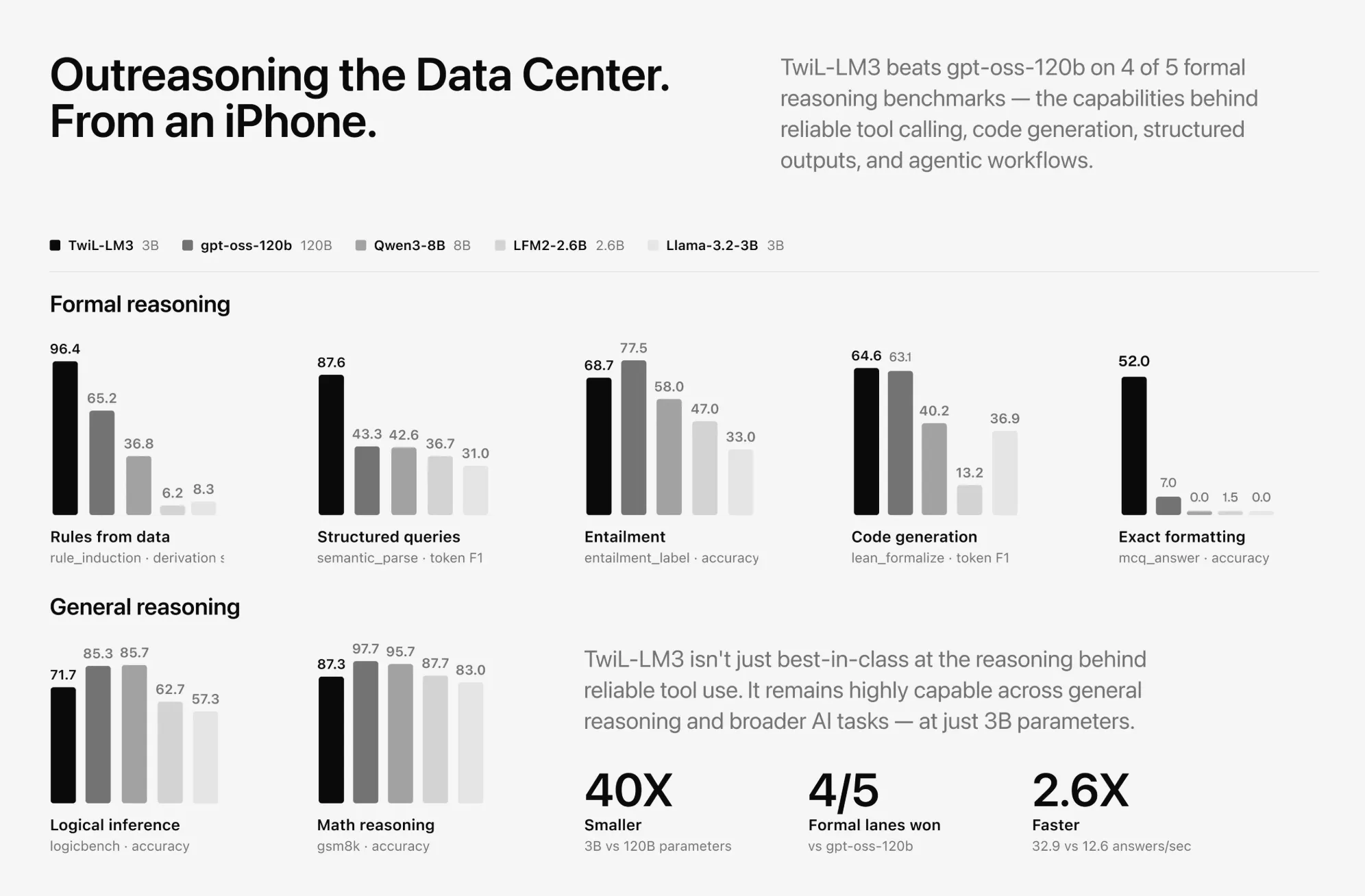
webAI lança TwIL-LM: uma família de modelos de lógica formal de 1,7B e 3B para autoformalização em hardware local
Blog